

Common Gold Trading Mistakes That Cost Traders Money
Gold trading looks simple from the outside. The chart moves fast, the setups look clean, and social media makes it seem easy to catch big moves on XAU/USD. The problem is that most traders lose money long before they learn how gold really moves.
Gold is one of the most emotional markets in forex. It reacts hard to news, interest rates, inflation data, and fear in the market. One mistake can wipe out days or weeks of gains if risk is not controlled.
Most traders do not fail because they lack indicators. They fail because they repeat the same bad habits over and over. Once those habits become emotional, the losses grow even faster.
While discipline is always the biggest factor, trading conditions matter too. Access to fast execution, reliable charts, and low spreads through platforms like Dominion Markets can help traders focus on following their plan instead of reacting to unnecessary trading friction.
Here are the most common gold trading mistakes that drain accounts and how traders can avoid them.
Trading Gold Without a Plan
Many traders open XAU/USD charts and start taking random trades based on feeling. One candle spikes, they buy. The next candle drops, they panic and close.
This creates chaos very quickly.
Gold moves too fast for emotional decisions. A trading plan gives structure before the market opens. It tells you:
- when to trade
- where to enter
- where to place stop loss
- how much to risk
- when to exit
Without a plan, traders keep changing decisions during the trade. That usually ends with larger losses.
A simple plan works better than a complicated one. Most profitable traders repeat the same setup again and again instead of chasing every move they see.
If you are new to XAU/USD, it helps to start with proven setups rather than creating your own strategy from scratch. This guide to gold trading strategies for beginners explains the key approaches traders use to analyze gold, find trade opportunities, and build a structured trading plan.

Trading Gold Without a Plan
Using Too Much Risk on One Trade
This is one of the biggest reasons traders blow accounts on gold.
Gold can move hundreds of points within minutes during major news or strong session volatility. Traders who use large lot sizes often underestimate how quickly losses can grow.
Many beginners think bigger lot sizes mean faster profits. What usually happens is the opposite. One sharp pullback hits the stop loss and damages the account badly.
Risk should stay small on every trade. Many traders risk only 1% or less per setup because they know losing streaks happen in every strategy.
Traders who want to build a more structured approach to position sizing, stop placement, and account protection should learn the core principles of gold trading risk management before increasing their exposure to the market.
Gold rewards survival. Traders who stay in the market longer usually improve with experience. Traders who overrisk rarely last long enough to learn.

Using Too Much Risk on One Trade
Placing Stop Losses Too Tight
Gold does not move like EUR/USD or slower forex pairs. XAU/USD creates deep wicks and sharp swings before moving in the main direction.
New traders often place very tight stop losses because they want a better risk-to-reward ratio. The problem is that normal gold volatility stops them out before the move actually begins.
This creates frustration. Traders see price hit their stop loss and then move exactly where they expected.
A better approach is to place stops around market structure instead of random small distances. Some traders also use ATR to measure current volatility before setting stops.
Wider stops do not mean higher risk if position size is reduced properly.
Revenge Trading After Losses
Few things destroy trading accounts faster than revenge trading.
A trader loses one trade and immediately tries to win the money back. Then they take another rushed setup. That trade loses too. Emotions grow stronger, and the decisions get worse.
Gold moves fast enough to punish emotional trading very quickly.
Revenge trading usually includes:
- forcing trades
- increasing lot sizes
- ignoring confirmation
- moving stop losses
- overtrading during volatility
The market does not care about previous losses. Every trade is separate.
Good traders slow down after losses. Some stop trading for the day after hitting a set loss limit. Others step away for an hour before looking at charts again.
That short pause often saves the account from larger damage.

Revenge Trading After Losses
Chasing Breakouts Too Late
Gold breakout trades attract many beginners because strong candles look exciting. The problem is that many traders enter after most of the move already happened.
This usually happens during the London and New York session overlap when volatility increases sharply.
A candle breaks resistance and traders rush in from fear of missing out. Then the market pulls back hard, sweeps liquidity, and traps late buyers.
Gold is famous for fake breakouts.
Strong traders wait for confirmation instead of emotional entries. They understand that missing one move is better than entering bad trades repeatedly.
Patience matters more than speed in gold trading.
Ready to Apply This in Live Markets?
Ignoring Major News Events
Gold reacts heavily to economic news. Interest rate decisions, CPI data, Non-Farm Payrolls, and Federal Reserve comments can move XAU/USD aggressively within seconds.
Some traders ignore the news calendar completely. They enter trades minutes before high-impact events without understanding the risk.
This creates dangerous conditions:
- spreads widen
- slippage increases
- volatility spikes
- price reverses quickly
A good setup before news can fail instantly after the release.
Many experienced gold traders either reduce risk during major events or stay out completely until volatility settles.
Knowing when not to trade is just as important as knowing when to enter.
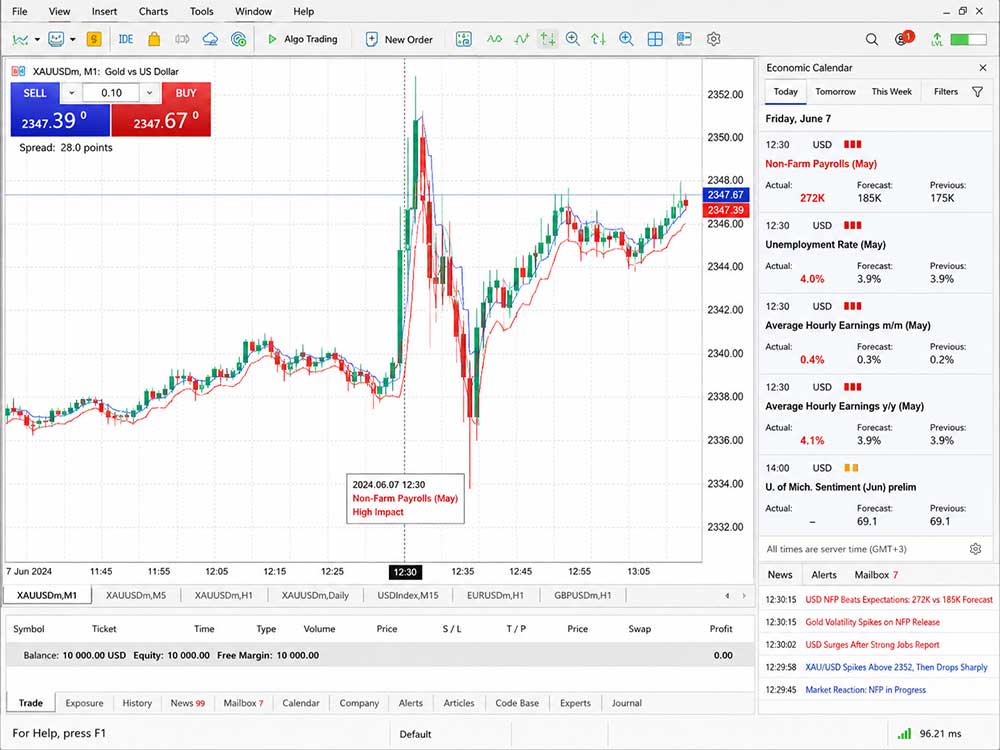
Ignoring Major News Events
Trading Every Small Move
Gold charts move all day, but not every move deserves a trade.
Many traders feel pressure to always be in the market. They open charts during slow sessions and force setups that are not clean.
This leads to overtrading.
Overtrading drains accounts slowly because fees, emotional stress, and poor setups start stacking together. Traders become mentally tired and stop following rules correctly.
Some of the best gold setups happen only once or twice a day.
Professional traders spend more time waiting than trading. They know patience protects capital.
Moving Stop Losses Emotionally
A stop loss exists for a reason. It defines the risk before entering the trade.
Many traders move their stop loss farther away once price starts going against them. They hope the market will turn back.
Sometimes it does. Most times it keeps moving deeper into loss.
Small losses become large losses because traders refuse to accept being wrong.
This habit often comes from fear. Traders hate closing losing trades because it feels painful emotionally. The problem is that avoiding small losses usually creates bigger damage later.
Good traders accept losses quickly and move on to the next setup.
Letting Emotions Control Decisions
Fear and greed control most bad gold trades.
Fear causes traders to:
- close trades too early
- avoid valid setups
- panic during pullbacks
Greed causes traders to:
- overrisk
- chase candles
- hold trades too long
- ignore exit plans
Gold amplifies emotions because of how quickly price moves.
This is why psychology matters so much in XAU/USD trading. A decent strategy with strong discipline often performs better than a great strategy with poor emotional control.
Many traders improve once they stop focusing only on entries and start controlling reactions instead.
Ignoring the Bigger Market Picture
Some traders look only at small timeframes and ignore what is driving gold overall.
Gold is strongly affected by:
- the US dollar
- bond yields
- inflation
- interest rates
- geopolitical tension
For example, a strong DXY often pressures gold lower. Rising bond yields can also weaken gold demand.
Ignoring these factors can create confusion. Traders may keep buying while the broader market conditions push gold downward.
This does not mean every trader must become a macro expert. Still, understanding the main drivers behind gold helps traders avoid trading blindly.
Ready to Apply This in Live Markets?
Trading Without Patience
Impatience sits behind many trading mistakes.
Traders enter before confirmation because they fear missing the move. They increase lot sizes because they want faster profits. They force trades because waiting feels boring.
Gold punishes impatience hard.
Clean setups usually take time to form. Strong traders wait for price to come into key areas before acting. They do not feel pressure to trade every candle.
Patience also matters after entering trades. Some traders close winning positions too early because they become nervous during small pullbacks.
Trusting the plan matters.
Final Thoughts
Most gold trading losses come from behavior, not lack of knowledge. Traders already know they should use stop losses, manage risk, and avoid emotional entries. The problem is following those rules consistently under pressure.
Gold rewards discipline more than excitement. Traders who survive long enough usually learn that simple habits matter most. Small risk, patience, controlled emotions, and clear setups often outperform aggressive trading.
The goal is not to win every trade. The goal is to protect capital while staying consistent over time.
If you are trading XAU/USD, focus less on catching every move and more on avoiding the mistakes that quietly drain accounts.
The trading environment also plays a role in helping traders stay disciplined. Low spreads, fast execution, and reliable trading tools can remove many of the frustrations that lead to emotional decisions. Dominion Markets gives traders access to gold trading through MetaTrader 5, along with competitive trading conditions that help them focus on risk management, consistency, and long-term growth.
FAQs: Gold Tradidng Mistakes
1. Why do most gold traders lose money?
Most traders lose because of poor risk control, emotional trading, and overtrading. Many also enter trades without waiting for confirmation.
2. Is gold harder to trade than forex pairs?
Gold usually moves faster than many forex pairs. That means volatility is higher and risk must be managed more carefully.
3. What is the biggest mistake in gold trading?
Using too much risk on one trade is one of the biggest mistakes. One bad trade can damage the account heavily.
4. Why does gold hit stop losses so often?
Gold creates strong wicks and sharp pullbacks during volatility. Tight stop losses often get caught in normal price movement.
5. Should beginners trade gold during news?
Beginners should be very careful during major news events. Volatility and spreads can increase fast after economic releases.
6. How can traders avoid revenge trading?
Taking breaks after losses helps control emotions. Many traders also use daily loss limits to avoid emotional decisions.
Ready to Apply This in Live Markets?


